What sets white tea apart
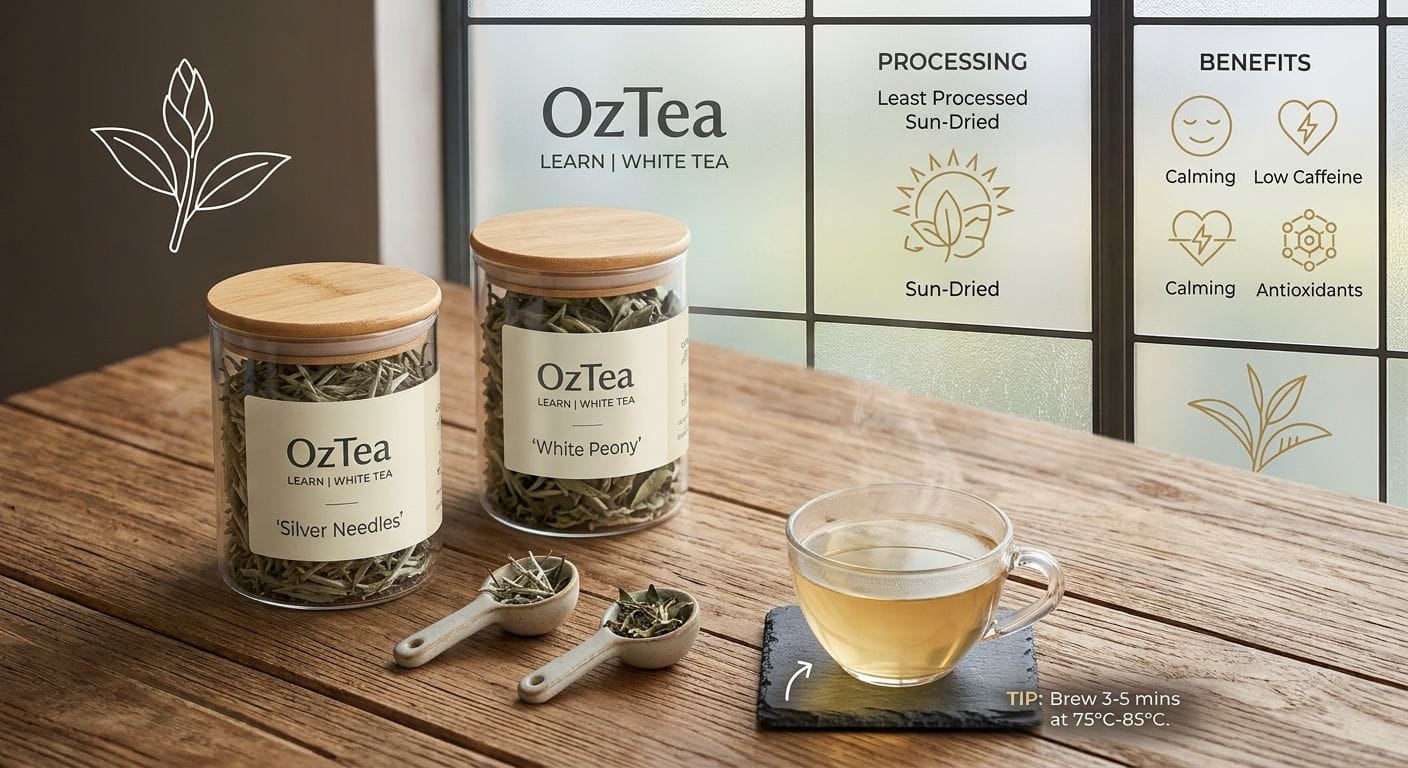
White tea is the least processed of the true teas, made from young buds and leaves that are simply withered and dried. Because it skips the rolling and heavy oxidation of other styles, it keeps a pale colour and a delicate, naturally sweet flavour.
Its name comes from the fine silvery down that covers the young buds. This gentle handling gives white tea a soft, almost floral character that's quite unlike bolder black or green teas.
A gentle, refined cup
White tea is typically lower in caffeine than black tea, making it a soothing choice for a relaxed afternoon or evening. Its subtlety rewards slow, mindful sipping rather than a quick gulp.
Rich in the same natural plant compounds found across the tea family, white tea has traditionally been enjoyed as a light, refreshing drink. Many people appreciate how clean and uncomplicated it tastes, with no need for milk or sugar.
Brewing white tea gently
White tea prefers cooler water, around 75 to 85 degrees, so it doesn't overpower those delicate flavours. Because the leaves are so light and fluffy, you may want a slightly more generous spoonful than you'd use for other teas.
Steep for two to four minutes and taste as you go. Like other quality loose-leaf teas, white tea can be re-steeped, revealing gentle new notes with each infusion.
Frequently asked questions
- Is white tea caffeine-free?
- No, white tea contains caffeine as it comes from the Camellia sinensis plant, though it is usually lower in caffeine than black tea.
- Why is it called white tea?
- The name refers to the fine silvery-white hairs on the young tea buds used to make it, not the colour of the brewed cup.
- What does white tea taste like?
- White tea is delicate, smooth and naturally sweet, often with soft floral or subtly fruity notes and very little bitterness.
- What water temperature is best for white tea?
- Use water around 75 to 85 degrees so the gentle flavours aren't scorched, and steep for two to four minutes.