What makes matcha unique
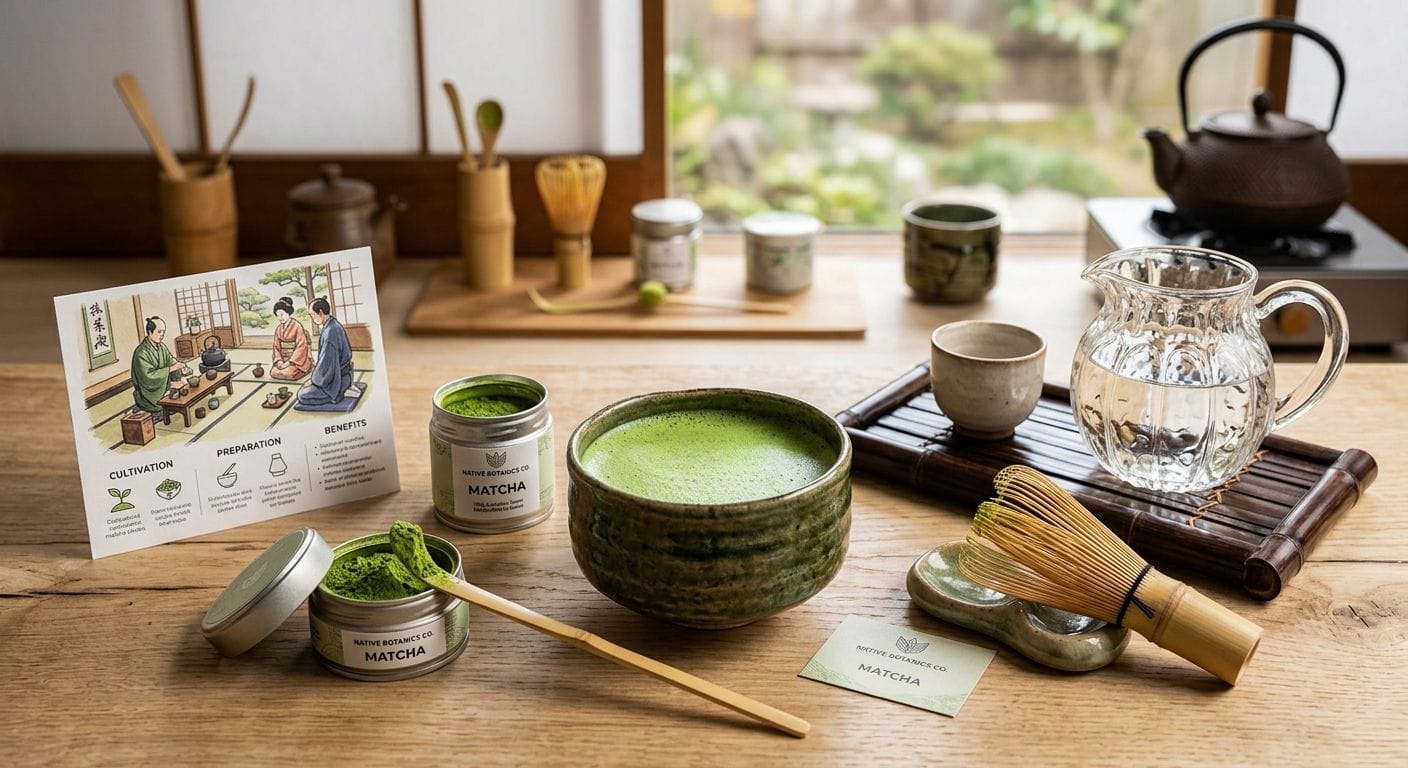
Matcha is a special type of green tea where shade-grown leaves are stone-ground into a fine, vivid powder. Instead of steeping and straining out leaves, you whisk the powder directly into water, so you consume the whole leaf.
This is what gives matcha its intense colour, its creamy texture and its concentrated flavour. It has been central to the Japanese tea ceremony for centuries and remains a beautiful daily ritual today.
Flavour, energy and calm
Good matcha tastes smooth and savoury with a natural sweetness and a hint of grassiness. Because you drink the entire leaf, matcha delivers more caffeine than a typical cup of brewed green tea, alongside the calming amino acid L-theanine.
Many people find this pairing gives a steady, focused energy that feels different from coffee. It's a lovely way to start the morning or lift a quiet afternoon, whisked plain or stirred into warm milk as a latte.
How to prepare matcha
Sift a small amount of matcha, about half a teaspoon, into a bowl to remove any clumps. Add a little water heated to around 70 to 80 degrees, then whisk briskly in a zig-zag motion until a fine froth forms on top.
For a matcha latte, whisk with a splash of water first, then top up with your milk of choice. Start with less powder and adjust to find the strength and creaminess you enjoy.
Frequently asked questions
- How is matcha different from regular green tea?
- Matcha is stone-ground into a powder that you whisk into water and drink whole, whereas regular green tea is steeped and the leaves are removed.
- Does matcha have more caffeine than green tea?
- Yes, because you consume the entire leaf, matcha generally provides more caffeine than a standard cup of brewed green tea.
- How do you make matcha without a whisk?
- You can shake sifted matcha with water in a sealed jar or use a small milk frother, though a bamboo whisk gives the smoothest, frothiest result.
- What temperature water should I use for matcha?
- Use water around 70 to 80 degrees. Boiling water can make matcha taste bitter and dull its natural sweetness.