The homeland of tea
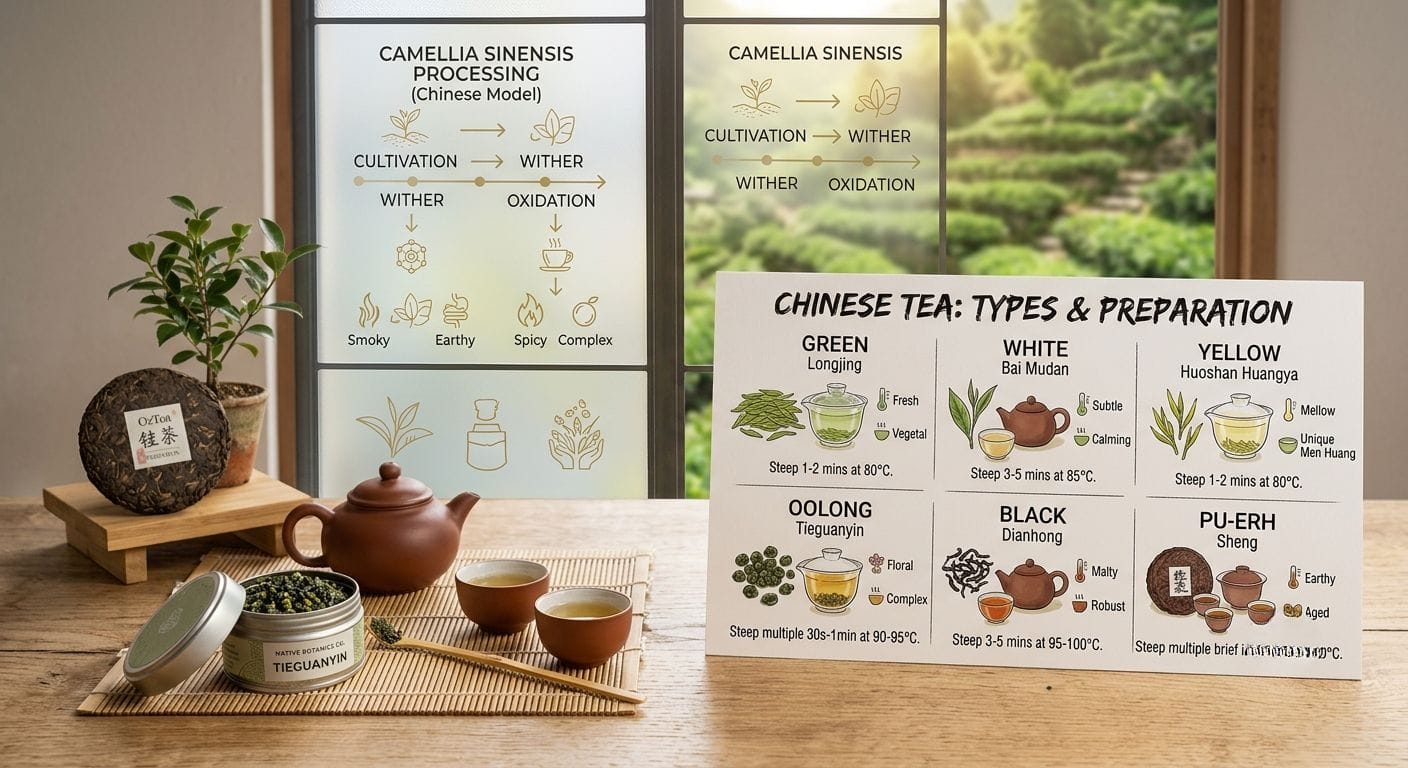
Tea originated in China, and the country still produces every major style, from delicate greens and whites to robust blacks, complex oolongs and rare yellow teas. This incredible variety grew out of centuries of regional craft and countless local traditions.
Because so much of tea culture began here, exploring Chinese tea is a wonderful way to understand the whole family. Each region and method tells part of the larger story of how tea is made.
Styles worth exploring
Chinese green teas such as pan-fired styles are famous for their nutty, toasty character, quite different from steamed Japanese greens. Oolongs offer remarkable complexity, while jasmine-scented teas showcase the art of gently perfuming leaves with flowers.
China is also known for pu-erh, an aged and fermented tea with a deep, earthy flavour, and for smooth black teas often enjoyed without milk. There's a lifetime of discovery in these teas alone.
How Chinese tea is traditionally brewed
Traditional Chinese brewing often uses a higher ratio of leaf to water with short, repeated steeps, coaxing out new flavours from the same leaves several times over. This gongfu style turns tea into an unhurried, sensory ritual.
At home you don't need special equipment to enjoy it. Simply match your water temperature to the tea, using cooler water for greens and hotter water for blacks and darker oolongs, and steep gently to taste.
Frequently asked questions
- Where did tea originate?
- Tea originated in China thousands of years ago, and the country remains the birthplace of every major tea style.
- What are the main types of Chinese tea?
- China produces green, black, white, yellow, oolong and dark teas such as pu-erh, along with scented styles like jasmine.
- How is Chinese green tea different from Japanese green tea?
- Chinese green tea is usually pan-fired for a nutty, toasty flavour, while Japanese green tea is steamed for a fresher, grassier character.
- What is gongfu tea brewing?
- Gongfu is a traditional Chinese method using a higher leaf-to-water ratio and multiple short steeps to draw out evolving layers of flavour.